Gatehouse releases early results from use of iPublish Tributes

Gatehouse Media just released its early performance results from the 2017 roll-out of self-serve platforms, developed by iPublish, in just some of its 300 plus markets.

The results, presented in a webinar by LocalMediaAssociation and a case study by LocalMediaInsider, show both savings of multiple FTE’s,  in addition to roughly $1.25 million in new revenues, including $500,000 from reverse publication of obituary special sections.

In addition to obituaries, the first three verticals deployed include  private party and recruitment classifieds.

The private party platform, iPublish  Marketplace, was primarily a cost-savings as customers placed orders online instead of through the call center.

The recruitment desk  used the platform as an easier “back end” to place orders for a variety of products – with an easier placement of upset – as customers called in. Now the platform also has a DIY option customers can use.

Obituaries had the fasted revenue growth.

AdCellerant uses TOP ADS to create 8 new case studies

Here’s how AdCellerant turned  a client contest into eight end user case studies and an educational  “Virtual Awards” webinar, recognizing the best local ad campaigns built on its platform.

 Challenge: AdCellerant´s  programmatic ad platforms empower local media agencies to sell hyper-targetted ad networks and other services.  They had a robust marketing department and anonymous user case studies from analytics, but  were unable to create end user case studies with names of real media and real advertisers.

Solution: The company partnered with LocalMediaInsider, a case study-based trade journal, to sponsor Top Ad awards, and recognize best practices in selling local programmatic.  

As part of the sponsorship, AdCellerant nominated numerous campaigns that had had outstanding results from its customers at local media companies around the country.

Nominees were contact by LocalMediaInsider, and  paid no entree fee.  Winners were announced monthly in Top AD case studies to a full media list of 26,000 executives and on  the LocalMediaInsider website.

In November  2017,  “Best ideas for selling programmatic,”  was created as virtual awards banquet and  webinar,  co-hosted by LocalMediaInsider  and the sales director of AdCellerant.

It was structured both as a customer recognition event, and a fast-paced 30 minutes of actionable tactics from the case studies on winning SMB campaigns.

“Local programmatic is just catching on, and its changing how newspapers and television stations go to market,” said Alisa Cromer, editor of LocalMediaInsider.

“This is the first time we have specifically recognized the great work that sales reps for local media companies are doing in this area. The results they have achieved for clients are exciting. ”

Results:

  • AdCellerant obtained eight new case studies  with real campaigns and media companies to use in its promotional materials and learning center.
  • 15,000 media executives opened emails announcing the winners and the webinar.
  • 1700 media executives clicked through to read more and/or visit AdCellerant´s website.
  • The webinar was attended by 26 media executives  interested in programmatic ad sales.

    Let´s do this! Join the PR club HERE. Need a custom quote? Just contact us at hello@techrefs.com, 408.892.9815 or leave a message below


    DIY advertising on iPublish software passes $1 billion

    Boston, Massachusetts, November 2017 iPublish Media announced that it has passed the $1 billion mark in processing revenues since its founding 11 years ago, and will process close to $200 million dollars in revenue through its self-serve platforms this year alone.

    “Self-serve is increasingly critical to local media companies as they reduce cost structure while maintaining or growing market share,” said Brian Gorman, president, in an interview with LocalMediaInsider last week.

    “With consumer purchasing moving online, self-serve is increasingly an end-user preference as well.”

    Other key benchmarks achieved by iPublish Media this year include:

    • More than 500 media websites are currently using the platform

    • 650,000 registered users place ads

    • Double digit growth of new registered users

    An industry leading self-service platform, iPublish Media software automates DIY production of print creative ads, online ads, multi-format programmatic ads and Facebook purchasing.

    “Our team has worked very hard to make our platform flexible and easy to use across all verticals thus making it one of the top self-service solutions,” stated Brian Gorman, Vice-President of Sales and co-founder.

    The platform has been especially effective in allowing media to stay competitive and introduce new products at competitive rates that would otherwise be too labor intensive to maintain profitably.

    “The newspaper advertising landscape has changed drastically. A future of lower print revenue and tighter operational costs has driven the need for new revenue from new sources,” he said.

    “Our customers have found that self-service advertising has helped to bring in new revenue and lower operational costs.”

    The company is now leading cutting edge solutions for specific verticals, such as real estate to purchase complete multi-media packages at competitive rates.

    iPublish Media Solutions LLC celebrated its 11th year in business on October 16th.

    vendetta

    How marketing powered Vendasta’s 50% YOY growth

    In 2016 the Vendasta  was named 42nd in the Profit 500, the definitive list of fastest growing companies in Canada, from Canada Business Magazine.

    Powering the growth is a robust marketing strategy. The company, which sells omni-channel marketing platforms to SMB´s via local media resellers, applied its marketing skills to its own plan.

    Today a sophisticated marketing engine  generates 1,000 to 2,000 leads a month. Sales have grown by  50% per year for the last three years with projected sales of $30 million in 2017 and a team of 300.  The company now supplies SMB marketing tools to 1,100 reselling partners in the U.S. and Canada.

    Here’s how they did it.

    Location: Saskatoon, Canada

    Core Team: Brendan King, CEO; George Leith, CRO, Jeff Tomlin, CMO,

    Founded: 2008 Projected  2017  Revenues: $30 million

    Background

    In 2012 Vendasta started selling online reputation management tools for media and agency resellers. Their basic business model was three-tiered subscription, plus wholesale pricing per product.

    “Today when a consumer sees an ad, they go into the research phase and go online before they ever go to the door of the business.

    “There is this entire additional stack of products that local businesses need. We enable the media to sell the entire stack,” Leith said.

    “We made the decision consciously or unconsciously that we needed to put ourselves in the shoes of the salesperson, or a day in the life of the agency…Nobody had paid any attention to those people.”

    “We finally made that connection, to build out the platform into a complete stack that includes a CRM, that we were already a long way down the road.”

    The upgraded platform can send a snapshot report or conduct a needs analysis “without a call on the client.”  Sales increased by 50% to a projected $30 million by the end of 2017.

    The role of content marketing

    The company’s success, Leith contends, is based on marketing “muscle.”

    “A new way to get in front of the customer is with content… We could not do what we do in the organization without marketing.  They create content for inbound marketing and, also, curate it for nurturing so that salesperson can send it easily to the end customer,” Leith says.

    The Vendasta team that will top 300 by the end of 2017  is composed of 100 developers, 60 sales reps and 16 marketers, supporting an ecosystem of  14,000 salespeople in the field.

    Leith says that a core philosophy is to let ideas “bubble up from the customer,” as well as from the marketing team. The content is organized into a powerful lead generation system that produces 1,000 to 2,000 leads from the website monthly.

    They also design “content and lead generation for partners,” Leith said.

    There are three tiers of audiences for marketing: the media company that buys the software, anyone in a sales role calling on small businesses and the third tier is content marketing developed for the small businesses themselves.

    With 100 developers in R&D, “innovating at a blistering pace,” a  huge task is just educating and delivering information through the ecosystem about new products, services they provide,” Leith said.

    All content created for salespeople also builds credibility and becomes a differentiator when media and agency resellers are deciding which digital service provider to use.

    The result is a virtuous cycle, more of a content web than an indexed library.

    Here’s a quick tour of how the marketing works:

    • The Website

    “The sales department are storytellers. But a good web presence is going to do some of this work,” Leith said.  He advises to “Identify your customer base and give them something that shows them that you are someone they can trust.”

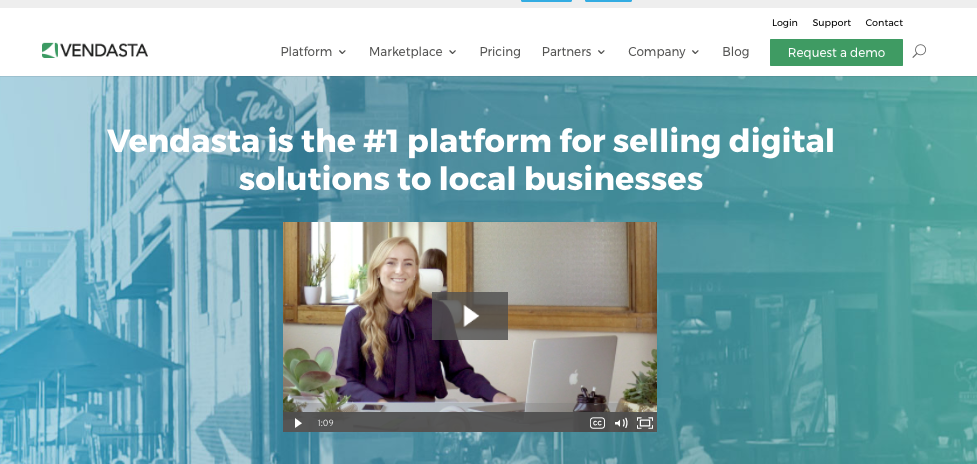
    Vendasta’s home page is primarily aimed towards media and other resellers; a “Request a demo” is a colored button, not just a tab, at the top right of all pages.

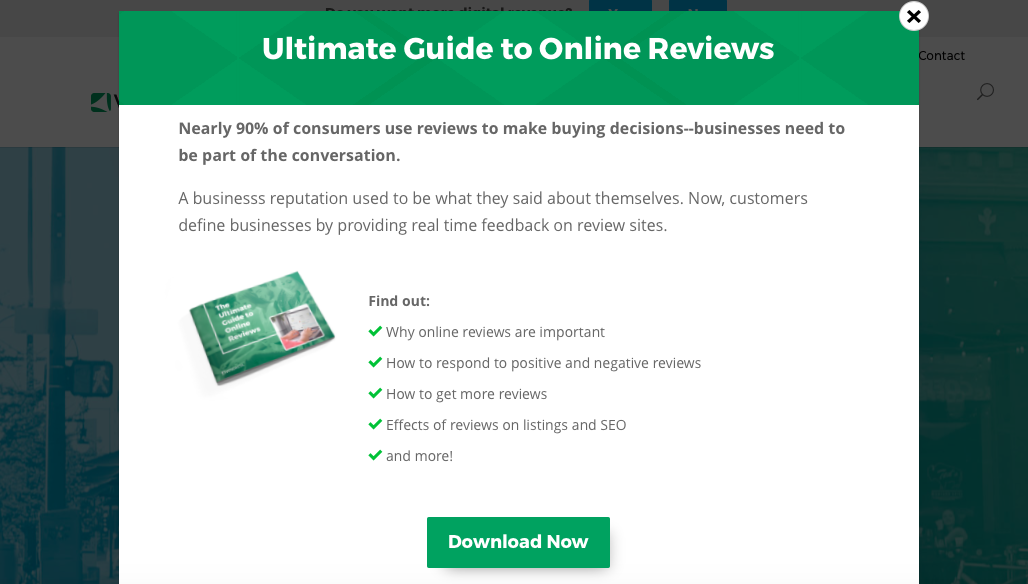
    Numerous pop-up case studies

    Numerous case studies on the site give critical information about strategies that  media companies have used to be successful in growing revenues.

    Numerous case studies on content are aimed at all three levels of customer.

    Plus pop-ups for best practices

    Reports on “best practices” help both sales reps and their SMB customers. A portion of the most important are also used as pop-ups to capture leads.

    • The blog

    The blog has a critical role in keeping both the internal sales team up on the innovations, plus communicating to 14,000 sales people logging into the platforms around the world.”

    “With 100 developers, we are innovating at a blistering pace,” Leith said.  “It’s a challenge to keep internal sales and the 14,000 sales reps up to date.”

    All new innovations, press releases and content are posted on the blog in order of recency.

    Where relevant, interstitial ads embedded in the blog promote related case studies and best practice reports with email capture.

    For example, three recent blogs include an infographic on “163 stunning social media stats,” a press release on being ranked #42 in Canada’s Profit  500 and  B2B Audience Targeting Tips for LinkedIn and Facebook .

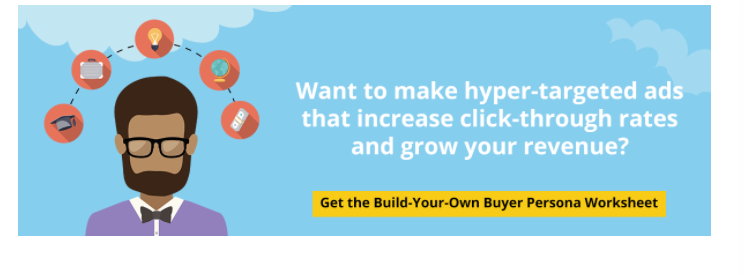
    In the center of the B2B targeting blog is a promotion for a “Customer profile worksheet,” one of the recommendations before creating an ad campaign.

    There is also a pop-up at the end to obtain a LinkedIn best practices report on using Autofill, also in return for an email.

    Each promotion and blog includes shareable links and counters.

    • Helping SMB’s with content aimed at their customers

    Content designed for SMB’s to use is also available with a Partner Log-in.

    “The same (marketing concepts) apply to the businesses we help. They should have a content engine and we are helping to provide content in a vertical-specific manner. The vertical content is white labeled so the agency or reseller is the trusted provider of that content.”

    All sales resources are housed together in a what the company calls “the single source of truth.”

    • Distribution

    As important as the content itself is magnifying its visibility via multiple distribution channels including conferences, email newsletters, social platforms and paid advertising.

    • LinkedIn advertising

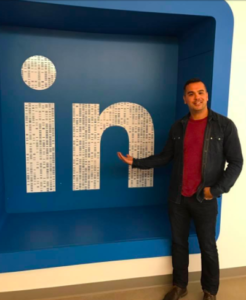
    Vendasta uses both Facebook and LinkedIn advertising in their lead generation strategy. However, a notable recent success has been the use of LinkedIn advertising for a lead generation program. The 1.1% CTR was so unusual that LinkedIn headquarters called Vendasta‘s marketer, Jamie Taylor, and took him to lunch. Of course, he wrote a blog about it, with two related email capture pop-ups.

    • Email

    Critical is email, which effectively “re-markets” to new leads and keeps all the constituencies up to date.

    An opt-in to the email can receive a notice every two to three days. These  fall into a few categories:

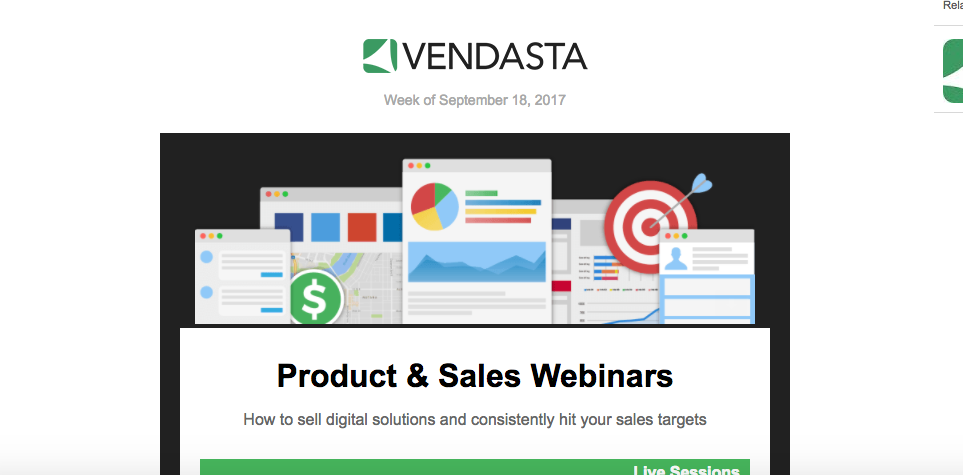
    • Product and sales webinars/videos

    These are all educational webinars and videos on new products and concepts:

    • Local Media Scoop

    These are colorful blog posts that inform in a highly digestible format, like Dear Agencies: You’re Screwed based on a pep talk from CEO Brendan King. It includes observations learned, and company announcements.

    • Product Insider

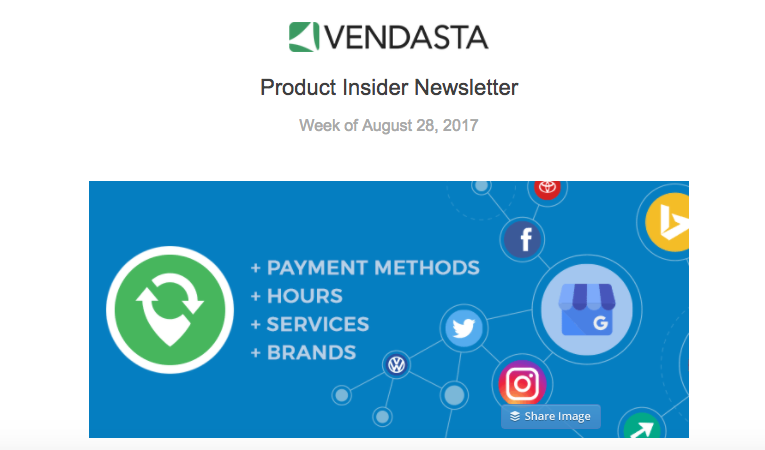
    This email showcases new products and what’s in BETA. Blogs are promoted at the end of the newsletter.

    The result of the content and distribution is a virtuous cycle of leads creation and development supporting 60 Vendasta sales reps and 14,000 media and agency reps around the country.

    “My advice is to market your organization with relevant content and see who is interacting with the content,“ Leith said. “The days of fitting the package to the needs of the media company are gone.

    “The right mix of content you supply should be the one the customer needs.”

    Companies who are interested in building or adding to their own content marketing capacity, we can help with strategy, B2B writers and distribution channels.

      Let´s do this! Join the PR club HERE. Need a custom quote? Just contact us at hello@techrefs.com, 408.892.9815 or leave a message below


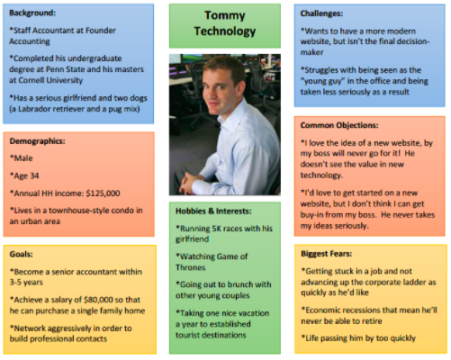
      How to create a customer persona

      Use our free tool to create customer personas, the building blocks of  successful marketing strategies.

      The slider walks you through the process, then generates a four color one sheet you can use immediately, to inform new employees, designers and marketers about who your customer is and what they want.

      So what is a customer persona?

      A customer persona is simply an imaginary person created to replicate a typical purchaser.

      The format is a condensed, one page description of a sample client, who is actually an aggregate.

      Customer personas allow team members to fully understand the customer on a human and emotional level, even when the sale is highly analytical.

      They are so powerful as a foundational element of marketing that companies like Vendasta, whose marketing powered rocket-ship growth of 50% year over year for the last three years, hands them to every new marketing employee.

      While a few marketers are extremely intuitive about messaging, best practice is not to rely on genius when you can share accurate intelligence with your team.


      Which persona should you add first?

      We recommend starting out by creating the most obvious persona that  your sales team already understands. Then segment your customers into large and small, and into different verticals.

      For example, if your company develops marketing software, it may license the platform both to local media and to digital agencies, some small, some very large. Make a short list of the groups your customers tend to fall into.

      What will you be asked about your customers?

      The basic information is title, company size, age, education, and then delves more deeply into motivators and concerns.

      The meat: Adding customer goals

      What are key goals they are tasked with this year, long term? How will they measure success? Will it be a revenue goal, a cost-saving goal, a productivity goal or a competitive alignment? The Persona Machine will help you walk through and share critical motivators.

      The potatoes: Adding challenges and fears

      Just as important as motivators are your customers challenges and fears.  Your team needs to be able to recite by heart the customers challenges and obstacles to purchase. 

      What slows down on the job? What are their top obstacles to making purchases, or making a purchase from your company versus a competitor? Which competitors are they likely to be talking to?

      What are they looking at for information?

      Once your content and advertising teams are on message, it is equally important to distribute these messages on the platforms that your customers are using for trade information.

      Which associations, blogs, social networks and trade media are they reading? Who else do they rely on internally or externally for recommendations?

      The image

      The last important piece of the Persona Machine is uploading an image. Your customer’ images convey a variety of demographic and emotional information.

      We have one huge rule about images:  please start with real photos of customers, before going to Google images for a fashion shot.  Don´t guess. Don’t visualize who your customers are without seeing them. Rather, obtain real images, even if you cannot use them in internal materials, you will be way ahead go the game.

      We looked for images of brand loyalists at the VP levels in corporate local media – that is, people who control hundreds of millions in revenues and can make or break a software company. These are real images of these VP´s from case studies this month on LocalMediaInsider:

       [

      How do you get the information

      There are a number of ways to obtain information that makes a customer persona into a critical building block for marketers, versus a random guess.

      A quick and dirty way is to bring a lap-top or mobile device into a sales meeting and fill out the form with sellers over muffins or pizza.

      Maybe you also want to bring in support teams that take customer calls. Have some fun discussing your customers personalities!

      What if you need more data

      There are other ways to create data on your customers. One technology company had an intern make a list of top ten customers – i.e., the actual people who managed purchases –  and looked them up on Facebook and LinkedIn to create a spreadsheet, which was then used to create a composite.

      He was able to identify a variety of data points, including  job title, educational background, last few jobs, age and male versus female,  to feed into the aggregated model.

      If the customer type needs a more detailed analysis, an email survey with a phone follow-up can do the trick. If your company needs custom survey support please let us know at the end of this article.

      Need more help? We are committed to helping journalism based media connect with transformative technology.


        Ok, so how we can help?


        Ramp up our plan to drive more leads for the sales teamMore case studiesPR mentions in credible trade magazines and conferencesSend our message to the largest, hyper targeted audienceTarget conferences with programmatic adsSurvey customersReview site for customer pathCreate SEM campaigns that generate more leads

        14 tips for creating a great B2B case study from LocalMediaInsider

         Customers, not your platform, create your success

        Case studies are the #2 most influential type of information used by executives making a technology purchase – just after product demos. We picked up these pointers from LocalMediaInsider´s case study-based trade journal, which existed for five years solely on subscriptions to valuable case study content.

        According to LocalMediaInsider´s editor, the entire point of a great case study should be to capture what a top customer is doing right, in real life, after the purchase.  Not only is this  information worth the time  and money of other  top executives, it also recognizes your best customers and turns them into advocates.

        So what goes into a great case study, besides utilizing  the “challenge, strategy, results” model?   Here  are some tips:

        1. Do tell a story

        Don’t worry about showcasing features of the platform or service. This story is about your customer and how they overcame a challenge on the road to success.

        Business case studies need both just enough detail to engage a  reader and key statistics that prove the case to an analytical thinker.

        2. Do use the third person voice 

        This is not the time to to write in the generic company  “we,”  as in “we did this and that for the client.”

        It is the customer’s story, so using first person or second person is distracting.  Stick with “she, he and they.”

        3. Be educational

        Business readers use case studies to learn, so case studies that do not convey specific tactics the client used to create success miss an opportunity.

        In the worst case, a case study gives the “pain point,” mentions the platform/service and skips to results.

        These are not only useless as a source of “real world” strategy, but also less convincing to prospects.

        In the best cases, an educational approach builds confidence in your company, and lets prospect know they will have access to training.

        One example is a set of end-user case studies TechRefs has been building for Adcellerant, a platform that provides backend agency services.

        A typical case study in the set is one for end-user Geffen Playhouse. It describes the type of targeting (microproxity in this case), who supplied the addresses utilized, why those were selected, and other aspects of the multi-media campaign.

        This type of information can be used for customer training on verticals, as well as to show competitive differentiators for the platform, and to prove results.

        5. Do identify  exceptional clients

        Remember Lance Armstrong’s book, “It’s not about the bike”? Cheating aside, he had a point. As we noted above, in the case of SaaS, it is ultimately the customers, not platform,  that creates your success.

        Put another way, at least half of the success comes from what customer is doing with technology:  It is their strategy and engagement that tells the story.

        So…. make a list of your most successful clients, but start with the smartest ones.

        6. Make it a win/win for the customer by recognizing their thought leadership and execution strategies

        The complaint we hear most from technology companies is that even though they have the data on their most successful customers, they are not able to get the customers’  permission to use it.

        Sometimes the CEO  is pushing for better case studies, but the marketing department cannot deliver – and too often it is not their fault.

        Only the CEO can decide whether a technology company will act like a vendor or  a strategic partner, and commit to the deeper level of engagement required.

        So how do you get customers to talk about their successes?

        One way is to engage awards programs that add to company and  professional credentials. help them expand their own professional network,  and facilitate sharing of best practices.

        It helps to utilize a third party like TechRefs or LocalMediaInsider who use professional journalists. However, some companies, such as SecondStreet Media, a hugely successful company in the cut-throat world of deals and contesting,  have built entire resource centers using the case study model.

        SecondStreet Media   creates a variety of their own ongoing customer recognition programs such  “Top 30” deals or “Top Ten contests for fall” shared with customers from around the country.

        These case studies are recategorized by product and vertical for use as a  training resource and have become a major differentiator for SecondStreet as an SaaS platform.

        Some ‘winners’  actually write their own best practice case studies, a cool trick when you consider how many companies say they cannot get permission for “real” case studies at all.

        SecondStreet also hosts  customer events to facilitate peer sharing, and is invited to speak at customer conferences – not about their success, but about customer best-practices.

        Another savvy platform company, iPublish Media, holds webinars and speaking events where their most successful media customers are invited to talk about how they did it and/or share new ideas.  The most popular ones also go into the development queue.

        If that sounds like s stretch, partnering with external awards is another method. To create end-user case studies for AdCellerant,  LocalMediaInsider partnered with them to nominate excellent client work in  Top Ad Awards, which recognizes excellence in local digital advertising.

        Winners received a subscription and invitation to the virtual awards banquet.  The program generated AdCellerant’s first ten case studies using real clients and results for the first time.

        8. The first part of the case study: The  challenge

        To build a great story, start by using just enough information about the background of the company for the reader to engage. How old is it? Where is it? Who is the key executive? What was the challenge?

        Yes, this can and should be short, but a few key details make the company “real” to the reader. It doesn’t have to take more than a couple of sentences:

         Denver-based media customer, Westword, was trying to resurrect a  dormant account, Sportique,  a store that sells urban scooters.

        Westword’s sales representative persuaded the store to give it another try for their first ever “blow out sale” intended to clear floor inventory for new models.

        Hooked yet? Find out what happened here. 

        9. Don’t scrimp on the strategy and tactics section

        As mentioned above, the strategy area of the case study is where other executives learn but finding specific tactics.

        Here’s the beginning of the strategy in  the Geffen Playhouse case study:

         “The LA Weekly supplied the addresses of 766 live, ticketed venues,  using its programmatic partner,  accelerant, to “map” the campaign to the addresses,  reaching people on their phones and devices while they attended events. The campaign ran for five weeks prior to and during the show.

        Device retargeting “picks up” device information for anyone logged in on a device and retargets them for another 30 days. “

        The case study went on to show how The LA Weekly supplied an email component, online ads on their own website and even a drag queen in the lobby for the opening night.

        For more multifaceted strategies, use bullet points, screenshots and other visual examples. The more cases studies with this kind of valuable information, the better set your company will be to begin offering Best Practices webinars.

        10. Begin with the end in mind: Results

         Results are so important that they make powerful headlines. Here’s one TechRefs wrote for the Sportique campaign mentioned above:  “Sportique’s programmatic campaign increases YOY sales by 40%”

        Take some time to find the most powerful statistics or other factors in the results. “Sales increased by 3000%”  sounds better than “Sales increased by $3000.”

        What is tracked may not be revenues; it could be the number of inquiries (clicks), conversions, cost savings, time savings, end-users gained, or just that the customer was saved and renewed for five more years.

        In the case of the  Geffen Playhouse case study,  the media and the theater company had agreed that anyone who stayed on the site 30 seconds or longer was likely to be buying a ticket.

        Here are the stated results:   “274,000 impressions generated a .23 Click Through Rate (CTR)  for about 621 click-throughs and  241 ‘conversions’  ie people who stayed on the site 30 seconds or longer.

        “Of the conversions, 78% clicked on the ads in real time and 22% came back after the fact, during the retargeting phase.”

        Additional information is more qualitative:

        “’It is a really strong audience, sitting in the venue waiting for the show to start or during intermission,’ Cooperstein said.  This data now belongs both to V Digital and Geffen, who can retarget these same people at a future date.”

        11. Yes, this takes a phone call

        Sending questions in advance often helps, but a phone interview is a necessity for follow-up questions. Otherwise, the case study tends to be dry and incomplete. There are a variety of ways to present information, ie rather than referring to earning $3000, the program result could be a more exciting 300%. Questions can solicit this extra information.

        If a content writer is using email questionnaire only, it’s time to find a journalist.

        12. Add an image and some background on the customer

        Once you start adding images of the people recognized by awards programs,  you will never look back.

        Not only does the image of the client add life to the case study, but it underscores that this is the work of a real person, and helps people who have shared information to build their professional network. Here are a couple of  actual human being at the top of their field, contributing expertise:
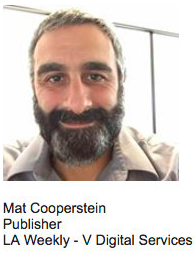
         

        Yes, humans, not technology, do these things.

        13. Send the case study to the client for approval 

        The best way to avoid any problems down the line, either from mistakes or anything else that might crop up, is to send the case study back to the client.

        In our experience only about two in ten case studies have minor changes and about one in 30 is “killed” by a company higher-up determined to control information.

        However, it is always better to lose a case study than to break a trust.  One tip for a higher rate of approval is to be assumptive, rather than waiting on the client. Giving a deadline, “please let me know by Friday, our publication date, if there is anything here that is inaccurately worded,” will avoid losing all the work on the case study for a client who stops responding for whatever reason.

        14. Acquire a referral/testimonial but be 100% transparent

        As long as the client is on the phone and sharing information,  the interviewer might as well attempt to a reference, usable testimonial or both.

        The most transparent practice is to always notify the interviewee, even by a follow-up email, “Hey,  we’d like to post this quote on the (vendor)  website next week. Please let me know if you have any objections.”

        Work harder to get an actual confirmation on the use of a quote if the case study is not widely published. There’s nothing that breaks trust faster than being surprised by seeing your own words turned into an unintentional online testimonial.

          dogfooding

          How dogfooding sells your platform

          We don’t like the term either, but it it does describe a super useful practice:  Using your own products, services and expertise for your own company.

          Makes sense, right?

          If you make beautiful sales funnels, your site should have beautiful sales funnels. If you provide content marketing, you should write blogs like this one. If you serve beautiful and unique ad templates, you should advertise using your own beautiful unique ad templates. Make sure the marketing team gets it!

          Rather than our standard case study format, we decided to show you a timeline of  corporate dogfooding practices, as  the word evolved through technological history.

          1981 –  Apple removes all typewriters from its company in an effort to prove an electronic universe is the future of the written word.

          1990’s –   By 1991, in  general, Microsoft is mostly running on its own Windows operating  system, virtually “self-hosting.”  It is “called out”  for using Unix for email. It switches.

          1999 – Hewlett-Packard’s employees refer  to a project using its own products as “Project Alpo.

          2000Mozilla does, too.

          2007 – Jo Hoppe, the CIO of Pegasystems uses “drinking our own champagne” instead. It does not catch on.

          2009 – Toney Scott, the new CIO of Microsoft, argues the term should be changed to “ice-creaming,” since their products are “like ice cream to its customer,” even though the phrase sounds vaguely disturbing.  It also does not catch on.

          2011YouTube allows users to choose a Creative Commons license, instead of a commercial one, followed by the message (Shh! – Internal Dogfood), posted on all products internally tested.

           2012 – “Self-hosting” begins to replace “Dogfooding” at companies who upgrade their systems every night to their latest software iterations.

           2016 –  Developers of IBM’s mainframe operating systems, a conservative crowd, still use  the term, “eating our own cooking,” the go-to-phrase for people who are bothered by the dog food aspect.

          The odd thing about dogfooding, the word, is that it seems to imply something unappealing about your company’s products: Before you actually used it yourself, It may only have been fit for a dog.

          Plus, are those “dogs” your customers?

          But at the end of the day, dogfooding provides a basic answer to a visceral issue: If you won’t eat it why should they?

          Why should clients be served anything less than you would want to be served  in a SaaS platform?

          In our aesthetic hearts, we would rather use the metaphor about Escher drawing his own hands drawing his hands. Or explain how Bach’s fugues mathematically circle back over themselves like Godel’s math theorems.

          But we have “dogfooding.” Everyone knows what it means.

          So yeah. We eat our own dog food.

          You should, too.


          Become a strategic partner

          First the data: The average large IT purchaser considers just three to five vendors out of dozens or even hundreds of software providers as strategic partners, (IDG, Survey of IT purchasers, 2016).   So what turns a vendor into a partner?  

          Here’s the data from IDG, which  defines a strategy partner in this way:

          A strategically important vendor that has gone beyond effective delivery of systems and services to become a consistently responsive, agile, and trusted collaborator in creating value.”

          They list  five important considerations: 

          1. Rapid response to service requests
          2. Understanding of business goals and objectives
          3. Post-sales support and service
          4. Long-term viability
          5. Vertical industry knowledge

          In the media technology industry, which helps media companies transform their business models,  some but not all, tech companies meet this criterion.  

          However,  most successful strategic partners do, and a few like Second Street Media, iPublish Media,  Vendasta and TapClicks not only do they meet but exceed these criteria. 

          Among other competencies, they all are a few best practices: 

          1.  Publish a deep catalog of case studies and best practices shared by clients to train teams who use their software.  
          2. Produce newsletters that do more than “sell” but also help to keep customers up-to-date on best practices and webinars.
          3. Sponsor their own events and invite customers to attend and share best practices and new ideas for using their platforms.  
          4. Their software itself is solid, easy to use and dramatically increases revenues, saves money or both. It is a “game changer.”
          5. Their company is deep on the development side, with robust development teams adding new products and integrations that make them more valuable, based on customer feedback.

          The transition from a platform and/or vendor to a strategic partner requires increasing marketing and customer support capabilities in stages, starting with a simple roadmap so your team can take on workable milestones.  Let us know how we can help, just book a time here at your convenience. 


          linkedin advertising

          Vendasta generates 1000 leads with LinkedIn advertising

          B2B marketers are not great at using social media to generate leads. It’s not just our opinion, only 7% of technology purchasers say they are influenced by the social media that  76% of technology companies are creating (Walker Sands, Marketing Charts).

          For the most part, marketers repost content on social platforms, without building  a clear lead generation strategy, or creating content valuable enough for a prospect to trade for an email. But there is another way to using social media that is often overlooked: Advertising on LinkedIn. Like Facebook for the B2C market, ads are super targeted, and a relatively cheap source of leads if used correctly. Here is a case study that shows how to do it. 

          Company: Vendasta

          Key executive: Jason Taylor, Demand Generation Strategist

          Initiative: LinkedIn advertising

          Challenge

          When Taylor set out to create a LinkedIn advertising campaign,  it was a relatively new experience for the company. The challenge was to drive  a significant number of actionable  leads for agencies and newspapers for the sales force to close at an acceptable ROI.

          He wanted  lead generation program, not a clicks to the website or blog posts, but valuable information his market wanted enough to trade their email, and which also qualified them as a prospect.

          Strategy

          Some of the work creating campaigns was already created by a competency in understanding customers and a deep knowledge of messaging. Here are some of the tactics Taylor deployed:

          1.  Utilized a customer profile.  Customer profiles are already deeply embedded in the Vendasta culture. Ever new marketer is given a set and you can see the evidence in the clarity of messages  (shameless self promotion, you can create as many as you want, edit, download, share and archive on this site, here. We just want your email).  So Taylor had this piece to start with.

          2.  Identified a data driven component in the message. “Agency churn exceeds 50%” is a statistic this market is paying attention to.  Again, the massive content strategy and blogging that Vendasta engages in allowed Taylor to more easily surface this  kind of compelling data.

          3. Found an amazing image. Taylor notes images increase engagement by 200%. The empty office (a failed agency) helped focus on the pain point (ouch!) and engage agencies.

          4. Selected the the audience “type in”  the job titles. There is a drop down for this, but Taylor says the options are overly broad and competition for “senior” executives is fierce.

          “You only want the right people clicking or your budget will be gone in no time. Really narrow down your personas (e.g., small business owner, digital director, founder, etc.)”

          5. Selected groups as part of the target. When Taylor deselected “groups”  his CTR dropped from 1.1% to .3%. Best practice is to keep group selections turned on.

          6. Understood that the content, not the ad, gets the leads. Taylor did not suggest exactly how he creates lead generating content in the crowded marketplace for digital information, but he did say that generic content like “50 Social media tips” will not perform.

          7. Created a lead generation-based ad and landing page. 

          Here just the 6th and 7th top performing ads created for the program. The landing pages matched these ads with an email capture in return for valuable information.


          Results

          Results from the approach were so impressive that Taylor was able to  write  a content marketing blog with the classic headline,   “How I Got LinkedIn To Take Me to a Hockey Game (Without Spending a Fortune)”

          • Taylor says he generated 1000 MQL’s (marketing qualified leads)  over a six month campaign
          •  CPL was $70 and a 93% qualified lead rate.
          • LinkedIn, perhaps interested in creating case studies of their own, was so interested in the 1.1% CTR, that they contacted him to find out how he did it, and even took him  to the Maple Leafs hockey game – a big deal in Toronto, where tickets can cost $500 a seat and a beer is $20. You can read his full blog here.
          • The first ad was more effective than the second one,  as “Churn” is more  specific concern than “challenges.”  Identifying these hyper specific issues can be picked up with careful attention to the customer persona (you can build one from our tool on this site here).  This in the agony business can almost  feel their heart rate increase at the word “churn,”  it is an emotional hot button issue in business. No one likes it.

          With so many competitors sure to read  his blog, it is not surprising that Taylor failed to disclose his top five ads in this blog.

          Conclusion

          Taylor succeeded in part by getting  into the heads of prospective buyers – a hyper competitive space with low barriers to entry  – and fully utilizing the targeting power of LinkedIn ads.  The four data collection reports he listed all focus on the pain-points with words like “churn,” “challenge” and “survival.”


          Taylor at LinkedIn headquarters

            technology marketing

            Seven key types of content used by B2B technology purchasers

            Technology purchasers consume a lot of different kinds of content before making a purchase. So which types of content should the marketing team focus on?  The following list uses current data to show what and why  C-Level, VP, IT and and sales leaders are looking at when making decisions, and which kinds of content are most important.

            1. Press​ ​releases​ 

            The first source of information in the pre-search phase, besides peers and colleagues, are trade journals.   Make sure your  press releases  do not bury the lead, but have a  “news hook” and are sent to all a curated list of editors. What goes into the press release?

            •  Major upgrades, and new products and verticals.
            • New accounts.
            • Industry information that proves your story. Example: If you sell email platforms,  statistics that use of the type of email functionality your company provides has has grown  by 50%.
            • General markers, has business grown by 200%  YOY? Did your platform process $600 million in transactions (as one of our client’s did) That helps sell the validity of concept.

            2. White​ ​papers​

            White papers are the second most-used way that executives “keep up” on technology in the pre-search stage (Walker Sands Survey, 2016).  These are longer,  and typically more statically-rich and/or  include best practices. The more general they are, the less useful, so if you can curate data from your own customer base,  that is a win-win for everyone. White papers should be useful enough for ads and onsite lead generation programs.

            3. Blogs

            ¨Blogs¨ are  a way to collect all your case studies and shorter bits of information,  build SEO, and  help educate key executives in how their industry is changing.  Typically you can house all the content in a running blog, then separate out the more  important “evergreen” content into a Resource Center, or list under each vertical.

            Here are some of the kinds of content that go into the blog

            •  Short write ups and images of  key data  points on mega-trends that support your company’s value proposition. Example: iPublish media pulled seven blog pieces from data on the rise in SMB´s DIY purchases of marketing and two trend articles on the importance of trusted content.
            • Negative warnings on the problem your platform solves. Example: The  #1 reason (your market) is losing (fill in the blank)  is (fill in the blank).
            • Company news too small to warrant a full press release. Welcoming smaller customers onboard, added capacities, client webinars.
            • Attendance at upcoming events.
            • All the other content as it is released, including PR, case studies, etc.

            4. Newsletters

            Newsletters are designed to distribute links to this information more widely without spamming them by delivering every individual blog post and announcement separately.  Some companies get their newsletter going quarterly newsletter,  as a report that shows  couple of new clients, case studies,  product upgrades, other blogs.  Later on you can run newsletter more frequently and segment so that customers receive more of the internal information, and prospects in the discovery and research  phase receive the more external messaging

            5. Case​ ​studies​: The #2 influence on the technology purchase decision

            Along with product demos,  companies who purchased  marketing technology said that case studies are the most important influence on the buying decision (Walker Sands Survey, 2016).

            Using a third party can overcome reluctance by making it a win/win for your  customers, who are also motivated by peer recognition for  “best practices” using your platform.

            6. Product demos

            Product demos  the #1 influence on technology purchase decisions (57% Walker Sands, 2016). If you are not getting some kind of  outside feedback on your product demo, you are losing out.Use your product demo, to answer “main concerns” as well as build the case for a purchase.

            7. Internal and External Peer recommendations

            By the time that key executives are actually making a decision, the role of the sales person typically goes quiet. Only 5% of executives rely on representatives at this stage of the game. Instead they are talking about the demo and the case studies internally, and getting more recommendations externally, as they  decide either whether to do this, and/or which company to choose.

            Peer recommendations from inside and outside companies are always top five factor in both instigating a search, selecting a vendor and deciding which company to select.

            Internally, the product demos and case studies are going to be the most influential on the internal group. Their main concerns are typically cost and ease of use. Build these concerns into the presentation.

            Externally, make sure you have great references from the case studies, or from clients that have not given you one but who are willing to vouch for your team.

            Where is the website in all this? The website  is critically important, especially in the research and engagement  stage, as potential purchases are deciding if they should continue to the demo. Studies shows that the website is in the top five influencers in making a decision between companies. This passive search needs to discover your  key messages, and the users should  understand the products and verticals, and find demo buttons right away.  See this report for a more detailed analysis of how content influence the technology purchase at each stage, and what internal constituency care about.